Safe Water, Healthy Lives: Preventing Waterborne Diseases in Pakistan
Learn how unsafe drinking water contributes to waterborne diseases in Pakistan, common contaminants, and the prevention and treatment methods discussed.


Safe Water, Healthy Lives: Preventing Waterborne Diseases in Pakistan
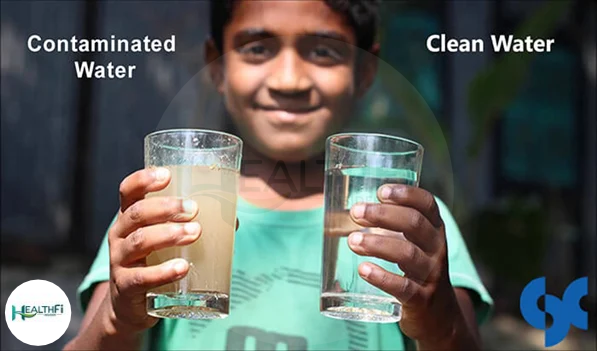
Water is one of the most vital necessities for survival. The World Health Organization (WHO) states that water is a “primary tool for enhancing public health” as the availability of water prevents many diseases and significantly improves hygiene. Access to clean water is a right for all, yet a privilege to only a few, as globally more than 1.1 billion people face water scarcity, and 2.4 million lack access to clean water. Among the countries with insufficient water and sanitation, Pakistan has been ranked third according to the International Monetary Fund (IMF), as 2.1 million Pakistani individuals are deprived of safe water.
Pakistan's public health suffers due to water sanitation and hygiene problems, as the risks of waterborne diseases exponentially increase. In 2017, 2.5 million deaths due to diarrhea were reported in Pakistan; 50% of the country's diseases and 40% of deaths occur due to consumption of contaminated water. The water is contaminated with many pollutants, such as fecal matter and microbes, metallic toxins, industrial and household waste, antibiotics, and other harmful drugs. The reasons for this water crisis in Pakistan include climate change that impacts the yearly rainfall, poor development of water storage structures, and political influences. Other causes include increased demand from a large population and industrial growth, which shortens the water supply. Pakistan faces severe economic challenges, as poor water sanitation cost around 343.7 billion PKR (1.5 billion USD) in 2019.
Current situation of water sanitation in Pakistan:
Overall Water Quality Status of Pakistan.
The water quality data, when compared with the National Standards for Drinking Water Quality, show that out of a total of 435 sources, 168 (39%) sources were safe, whereas 267 (61%) sources were unsafe for drinking.
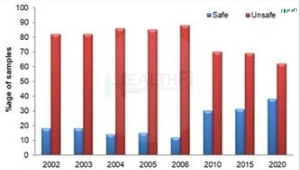
Status of Drinking Water Quality in Rural Areas of Pakistan:
The national-level urban and rural water quality monitoring programmes have provided input data for Pakistan’s economic survey (annually), the UN's Joint Monitoring Program (JMP), and annual statistics published by the Pakistan Bureau of Statistics, as well as provided inputs for the national water policy, draft national drinking water policy, and national environmental policy.
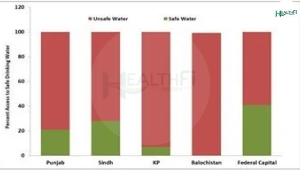
Waterborne Diseases and Contaminants:
In Pakistan, waterborne diseases account for 80% of all diseases and 33% of deaths. In addition, there is a high national expenditure of Pakistani rupees (PKR) 112 billion per annum due to hygiene-related illness; it includes diseases caused by unsafe water and poor sanitation.
Pakistan is blessed with many surface and ground water resources. However, increased technological development has led to the introduction of biological, chemical, and physical impurities in drinking water. Studies have shown that cotton farms in Multan and Punjab province cause ground water contamination by pesticides, where 33% of samples exceed the maximum residue limit. Moreover, improper disposal of industrial waste has introduced metals such as copper and iron; a country-wide study showed high concentrations of iron, where 28% and 40% were found in samples from ground and surface water, respectively, thus predisposing people to cancer. In addition to the poor water sanitation system and drainage lines, animal and human fecal matter containing coliform bacteria is drained into water bodies such as rivers and lakes, thus leading to waterborne diseases. In Islamabad and Rawalpindi, analysis of water samples showed that 94% and 34% were contaminated with total coliforms and fecal coliforms, respectively. Furthermore, open defecation is a bigger problem in most rural than urban areas in Punjab Province, where studies show 25% of the population practice it.
Every year, there are about 100 million diarrheal cases, and 2.5 million people in Pakistan die of endemic diarrheal disease due to the presence of various pathogens, including viruses, bacteria, and protozoa, in the contaminated ground water supply. Diarrhea accounts for 60% of deaths among infants and children in Pakistan. In addition, every day 670,000 children miss school due to diseases and lack of proper water sanitation systems. Other impurities present in water bodies include trace elements/heavy metals, including zinc, manganese, and copper, as well as pesticides. The most common waterborne diseases are cholera, dysentery, hepatitis, typhoid, giardiasis, intestinal worms, diarrhea, cryptosporidium infections, and gastroenteritis. Most of the waterborne diseases are most prevalent in rural areas, especially Pakistan's Southern Province of Sindh, Karachi, and Hyderabad. In Islamabad, Pakistan, hepatitis E is most prevalent due to the use of untreated water. In addition, contaminated water usually contains other pathogens such as E. coli (51%), Giardia lamblia (27.66%), Enterobacter (64%), Salmonella, cyclosporine co-enters, and Clostridium. In addition, Naegleria fowleri infections are common in Karachi; in 2019, there were 96 confirmed cases (92% males, 8% females). Conclusively, these diseases cause harmful effects, and unfortunately most people are unaware of the potential risks of using unsafe water for domestic uses such as drinking.
Preventative and Treatment Techniques
The preventative techniques used in Pakistan and their effectiveness are summarized in the table below.
Preventive and Treatment Techniques. | Effectiveness. |
|---|---|
Chlorine Tablets | Kills are low-cost, easily applicable, and widely distributed. |
Polymer Technology | Tested to remove around 65% of sludge; low cost, not easily applicable, and not widely distributed. |
Reverse Osmosis | Filtration leads to drinkable water; cost-effective, high energy consumption, but it does not eliminate organic contaminants. |
Carbon Nanotubes | Antimicrobial action, low cost, low energy consumption, recyclable. |
Multiple Tube Fermentation | Coliform detection, time-efficient (48 h). |
Hydrogen Sulfide Test | Fecal matter detection is less time-efficient (12–18 h). |
Microarrays | E. coli and virulence-related gene testing are widely used. |
Recommendations and Future Insights.
Globally, many programs have been introduced to monitor water sanitation conditions across countries, especially in low- and middle-income countries, as it has been stated that nearly 2 billion people drink water that is contaminated with feces. These programs include the Joint Monitoring Programme (JMP) and Sustainable Development Goal 6, which includes the 6 aims to ultimately 'ensure availability and sustainable management of water and sanitation for all’ by 2030.
Relative to the rest of the world, Pakistan, which is ranked among the top 10 countries with the highest populations living without access to safe water, is in drastic need of improving its water sanitation practices as well as its drinking water standards throughout its cities and rural areas. To work on water sanitation, key initiatives need to take place not only at the government level but also simultaneously at the individual level. If applied correctly, the deaths and diseases caused by waterborne diseases can be significantly reduced by maintaining adequate hygiene.
At the government level, the legislative approach should be used by water authorities. Water sanitation and waterborne diseases are major health concerns, so more investment at the government level should be made to work on projects to improve the quality of drinking water.
Along with the government, the private sector should be encouraged as well to work on water sanitation projects, as it can help address water problems in the long term.
Finally, on an individual level, practicing various water sanitation techniques can help improve the water quality. This is especially important and true in rural areas where public health campaigns can be useful in terms of reinforcing the quality standard. One reason for this is that rural areas are vastly underfunded and undereducated compared to their counterparts living in the city.
Frequently Asked Questions (FAQs)
What Diseases Can Unsafe Drinking Water Cause?
Unsafe drinking water can cause or contribute to diarrhea, cholera, typhoid, dysentery, hepatitis A, hepatitis E, stomach infections, and other waterborne illnesses. These diseases are especially dangerous for children, elderly people, and families with limited access to healthcare.
Why Are Children More Affected by Unsafe Water?
Children are more vulnerable because their immune systems are still developing. They can become dehydrated quickly during diarrhea or vomiting, and repeated illness can affect their growth, nutrition, school attendance, and confidence.
References:
Soomro Z. A., Khokhar M. I. A., Hussain W., Hussain M. Drinking water quality challenges in Pakistan. World Water Day. 2011:17–28. [Google Scholar]

Comments & Discussion
1 CommentJoin the conversation. Please keep the discussion respectful and educational.
Leave a Comment
Your thoughts are valuable to our community.
Suggested Reading

Mental Health Matters: Recognizing Stress, Anxiety, and Depression Before They Escalate
Learn the early signs of stress, anxiety, and depression; how they differ; and why seeking support early matters. For education, not diagnosis.
Prescription Drug Misuse in Pakistan: Understanding the Growing Risk of Opioids and Sedatives
Explore the rising misuse of prescription opioids and sedatives in Pakistan, the drivers, health risks, and what pharmacists and policy can do.
Syed Muhammad Hasnain Shah
Isightfull and informative