Vaccines Save Lives: Understanding Pakistan's Expanded Programme on Immunization (EPI)
Learn how Pakistan’s Expanded Programme on Immunization protects children and mothers, its progress since 1978, and the barriers to full coverage.
Dr. Rizwan Ahmed Khan
Medical Content Writers · Member
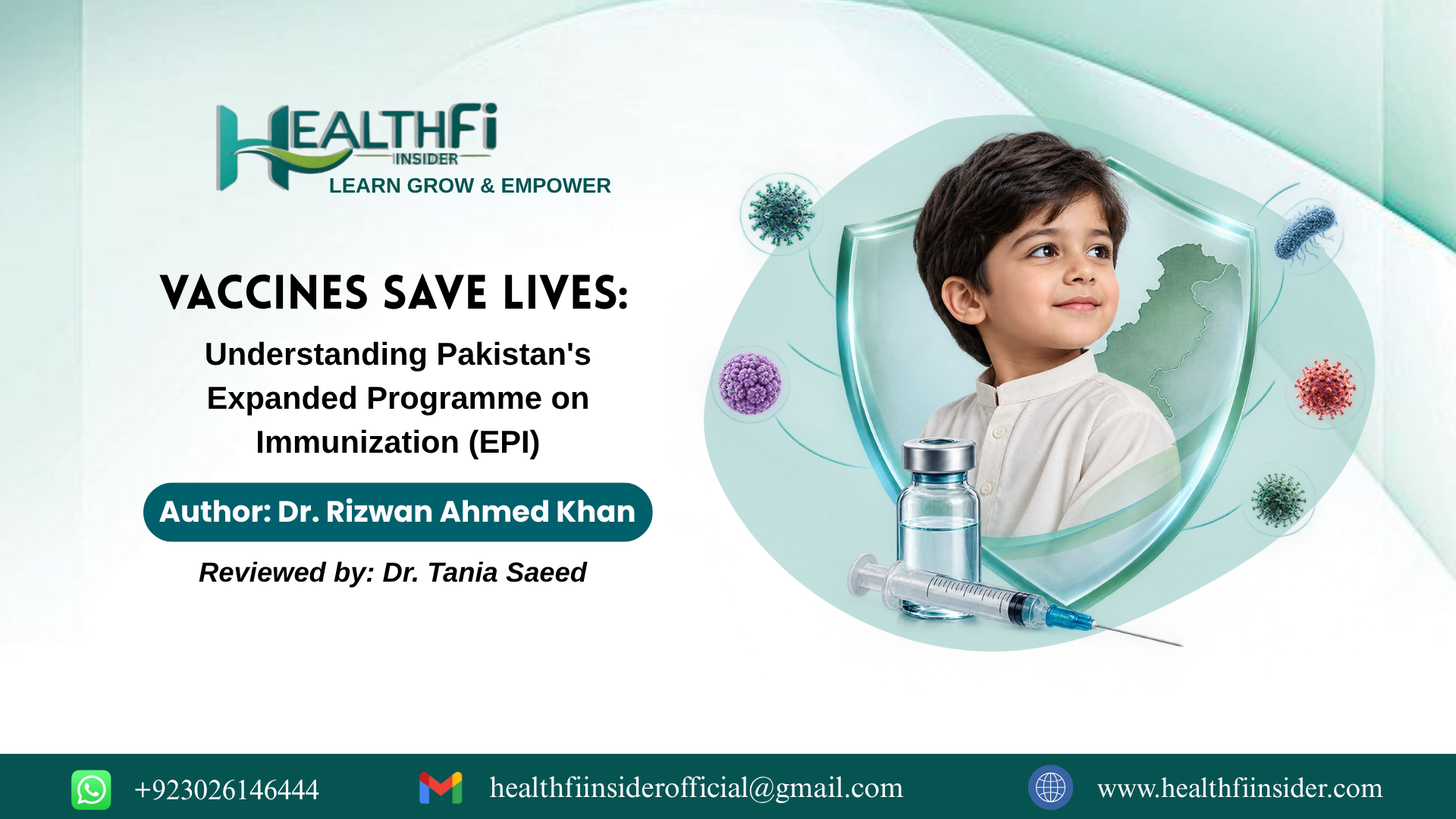
Vaccines Save Lives: Understanding Pakistan's Expanded Programme on Immunization (EPI)
The country lies among the first five nations in the world that have managed to reduce child mortality by vaccination. Pakistan has prevented 2.6 million child deaths from vaccine-preventable diseases, stopped smallpox transmission, lowered the incidence of paralytic polio by 99.8%, and made 80% of its population free from neonatal tetanus.Even though some progress was made, providing all children with all recommended vaccines is still a challenge. This can be hard for those who cannot get close to the medical facility, those who cannot afford it, and those who are misinformed. Those who do not believe any medicine is good enough for their child. In 2026, it is critical to think about the EPI and how it helps children by preventing certain diseases, and the importance of being fully vaccinated for the well-being of the community. In Pakistan, the Expanded Programme on Immunization (EPI) plays a key role in this protection. It offers routine vaccine services through the public-sector health system with the goal of reaching children and pregnant women and protecting them from diseases that lead to disability and death. Over the years, the programme has evolved and expanded as new vaccines have been introduced and priorities have shifted at the country level. Yet a vaccine can only protect a child if they are reached by it, receive the recommended doses, and the vaccines are handled and administered properly.Despite the progress, there are still some obstacles to achieving complete immunization of all children. These may include distance from healthcare facilities, low income, misinformation, and vaccine hesitancy, among others. Hence, in 2026, it will be important for families and the larger community to learn about EPI, the diseases that were previously prevalent before vaccination schedules were implemented, and the importance of going through the vaccination course
What Is Pakistan’s Expanded Programme on Immunization?
The Expanded Programme on Immunization is a health effort that protects children and pregnant women from diseases that can be prevented by vaccines. The Expanded Programme on Immunization focuses on giving shots to keep little ones and mothers healthy. As time went by, other immunizations were added to EPI to address the leading causes of death.The Pakistani EPI schedule includes vaccines against hepatitis B, Haemophilus influenzae type b infections, pneumococcal disease, rotavirus, and typhoid. The measles vaccine has been replaced with a combined measles-rubella vaccine in 2021. The typhoid conjugate vaccine was introduced in Pakistan in stages, and it was rolled out nationwide in 2022.At present, immunization in Pakistan is available through routine vaccinations, which can be obtained at EPI centers, health facilities, and outreach settings. In addition, the program collaborates with various stakeholders to ensure vaccine availability and increase awareness about immunizations among the public. Ensure that children are reached for vaccination according to the recommended schedule
Why Is Immunization Important for Children?
Preventing Serious Diseases:
The vaccines given during immunization help the immune system to recognize and fight off diseases caused by germs. The body is then able to fight off these diseases later in life. Some of the serious diseases.
Protecting Children Early in Life:
Infants are highly susceptible to several serious infections. It is important to start immunization as early as possible and complete all vaccinations in due course of time as per the national immunization schedule to protect them against serious diseases.
Mitigating the Transmission of Pathogens:
High rates of vaccination can help slow down the spread of infections. This also gives protection to people who cannot get vaccinated due to health issues and to babies who are too young to be vaccinated. The amount of protection depends on the disease the vaccine is being used for and how large the population is.
Alleviating Strain on Healthcare Systems:
Immunization prevents illness. Reduces pressure on health services by lowering the number of hospital admissions and the need for other treatments and long‑term care. Immunization also reduces the impact on the families of those affected, for example, by decreasing the need for caregivers or financial support. Immunization is considered one of the cost‑effective public health interventions available.
EPI in Pakistan, 2026: Progress and Enduring Difficulties
In Pakistan, child protection through vaccination is still lacking despite extensive attempts. has safeguarded approximately 160 million children and 130 million mothers over the course of over 50 years in collaboration with national and international partners. The significant decrease in instances of paralytic polio after 1994 was further confirmed.Youngsters who have not received any vaccinations against common childhood illnesses are known as zero-dose youngsters. Such children who have not received their vaccines might be found in villages in groups of houses in slums with people who move around a lot or in families where the people taking care of them cannot easily get to places where vaccines are given.Children might not get their shots while they are being treated for something or when their family moves to a new place. There could also be problems with getting to the clinic, being sick, or just forgetting to go.Some carers might choose not to vaccinate. They might stay away from vaccination care, thinking vaccines are useless or dangerous. These beliefs often come from people who give no advice. Fear and doubt can go down when carers get a say in vaccination choices. Sharing facts is also very important. Those facts should come from vaccinators who are liked in the community.Many families in some areas must travel very long distances to reach the nearest vaccination center. In these places, there may be a few vaccinators, or there could be safety issues, or vaccination services might be interrupted often.Vaccines cannot provide immunity without safe transport. Vaccine storage depends upon controlled humidity and temperature conditions. Storage systems depend on functioning fridges, backup power supplies, and appropriately trained personnel.
EPI Strategy for Pakistan
Sustained financing, coordination, and emphasis on repeated non‑immunizers define Pakistan’s vaccination strategy. Key parts of the vaccination strategy include keeping immunization reliable; doing outreach for poor and remote groups; speaking clearly in Urdu and local tongues; giving vaccines on time and in steady supply; and training good staff. Checking vaccination coverage in each district and in each group shows problems that hide when only national totals are used. A successful vaccination strategy needs convenience, trust, and easy access. Every missed chance is a chance to make health services better.
Conclusion:
Vaccines save millions of lives by preventing illness, disability, and death. The Expanded Programme on Immunization in Pakistan has made an enormous contribution to protecting people from preventable diseases and death. It is estimated that millions of Pakistani children and their mothers have been saved from potentially deadly infectious diseases by vaccines. However, the challenge is not over until every child is immunized and protected from vaccine-preventable diseases.Pakistan’s Expanded Program on Immunization offers an essential list of vaccinations that enable children to lead a healthy life. However, for this program to be truly effective, vaccines need to be available in all settings, and healthcare services need to be accessible and appropriate to families’ needs. Families need to be supported in making sure that their children receive all the recommended vaccinations. If your child has had one vaccine, it is better to consult experts about others that they need to get instead of leaving it until later. It is critical to make sure that children get the recommended doses at the prescribed ages. That's because the timely administration of all necessary vaccines protects the whole community from preventable diseases. Also, be sure to keep the vaccination card and ask your local EPI team for the vaccines that your child may need.
Frequently Asked Questions
Q. How may the Expanded Programme on Immunization (EPI) in Pakistan be defined?Initiated in 1978 in collaboration with the World Health Organization (WHO), the Expanded Programme on Immunization (EPI) in Pakistan constitutes an immunization initiative designed to safeguard children and pregnant women against infectious diseases that are potentially fatal and preventable through vaccination.
Q. What are the new vaccines added in EPI Pakistan?Pakistan's Expanded Programme on Immunization (EPI) protects children against 12 major diseases and has added new vaccines like the Rotavirus vaccine, the Typhoid Conjugate Vaccine (TCV), and the Measles-Rubella (MR) vaccine one by one.
Q. What is the main goal of the EPI programme?To protect children and mothers against diseases that can be avoided by vaccination and reduce childhood mortality
Q. Are there any side effects of the vaccines?Yes, all the routine EPI vaccines are provided free of cost at government hospitals.
Q. Who do we contact for information or to report side effects?The national toll-free immunization helpline number is 1166. You can also check out the website of the Federal Directorate of Immunization.
References:
Masud, Tayyeb; Navaratne, Kumari Vinodhani. 2012. The Expanded Program on Immunization in Pakistan: Recommendations for Improving Performance. Health, Nutrition, and Population (HNP) discussion paper. © World Bank. http://hdl.handle.net/10986/13579 LicenseOwais, A., Khowaja, A. R., Ali, S. A., & Zaidi, A. K. M. (2013). Pakistan's expanded programme on immunization: An overview in the context of polio eradication and strategies for improving coverage. Vaccine, 31(33), 3313-3319. https://doi.org/10.1016/j.vaccine.2013.05.015Federal Directorate of Immunization, Government of Pakistan. Service Delivery in Routine Immunization. https://www.epi.gov.pk/about-fdi/service-delivery-in-routine-immunization/ (accessed 15 October 2026). https://epi.gos.pk/faqs.phpNishtar S, Boerma T, Amjad S, Alam AY, Khalid F, Haq I, et al. Pakistan’s health system: performance and prospects after the 18th Constitutional Amendment. Lancet. 2013; 381:2193–206. https://doi.org/10.1016/S0140-6736(13)60019-7.Expanded Program of Immunization, Government of Pakistan. Communication Update: EOC Pakistan. 2014. http://epi.gov.pk/wp-content/uploads/communication-update/December-19-2014.pdf. Accessed 26 Apr 2019.

Comments & Discussion
1 CommentJoin the conversation. Please keep the discussion respectful and educational.
Leave a Comment
Your thoughts are valuable to our community.
Suggested Reading
AntiMicrobial Resistance In Pakistan: Why It Matters and How We Can Stop the Silent Pandemic
Explore why antimicrobial resistance is rising in Pakistan, its human and economic toll,and what
World Pharmacists Day 2026: Strengthening Pharmacists to Make Healthier Futures
World Pharmacists Day 2026 explores FIP's theme of empowering pharmacists, with a firsthand look at their expanding clinical role in Pakistan.
Saqib Ali
Informative and Insightful